
Where Suwanee Neighbor Records Begin
A block lookup starts with land, not a list of people. The Gwinnett GIS parcel layer outlines each lot and lets a user identify the owner and physical location recorded for it. The assessor adds a separate tax-mailing address. Public election data can show registered voters at released addresses, while permits and zoning records document work or government action tied to a place. Community organizations show only voluntary public contacts or affiliations.
| Block source | Evidence it provides | How to reach it |
|---|---|---|
| Gwinnett GIS Data Browser | Adjacent parcel shapes, owner, location, mailing, exemption, legal description, and Public NEI | Free interactive map |
| Gwinnett Tax Assessor | Owner and separate situs and tax-mailing details for one parcel | Free property information portal |
| Georgia voter lists | Lawfully released registrants by municipality, district, or precinct | Paid order; protected addresses omitted or replaced |
| Permits and zoning | Address-linked work and regulatory history | City or county source depends on jurisdiction |
| Community organizations | Public contact and voluntary affiliation | Organization pages or direct inquiry |
An owner's mailing address matching the parcel's situs address may support an owner-occupancy inference, especially alongside an exemption. It is still not conclusive. The property could have other household members, and the record may lag a move. A different mailing address might reflect an estate, trust, business entity, or simple correspondence choice. Suwanee neighbors should never be identified from one field alone.
Map Suwanee Neighbors Parcel by Parcel
The Gwinnett GIS Data Browser supplies the most precise public route from one house to the lots around it. Its Address Search finds the subject parcel. Zooming in draws boundaries, while parcel and label layers help distinguish lots. The Identify tool reveals one selected feature at a time. The viewer has Measure, Share, Print, bookmarks, transparency, and layer controls, but no documented public radius or buffer search for neighbors.
- Select Address Search, enter the full address, and choose the autocomplete result rather than leaving raw text in the box.
- Zoom until parcel lines appear. Turn on the parcel and label layers needed to read the immediate block.
- Identify the subject parcel, each boundary-sharing lot, and the parcels directly across the street.
- Record the PIN, owner, location and mailing addresses, exemption, legal description, and Public NEI for each result.
- Use Share or Print to preserve the map state. For a whole road, move to the Suwanee street directory method.
The PIN, or parcel identification number, is the stable key. The Public NEI field means an assessment-neighborhood number, an appraisal grouping rather than a social neighborhood. Keep that difference clear when describing the block.
See Suwanee Parcels in Context
The county's GIS parcel browser is the source for the map interface shown here.
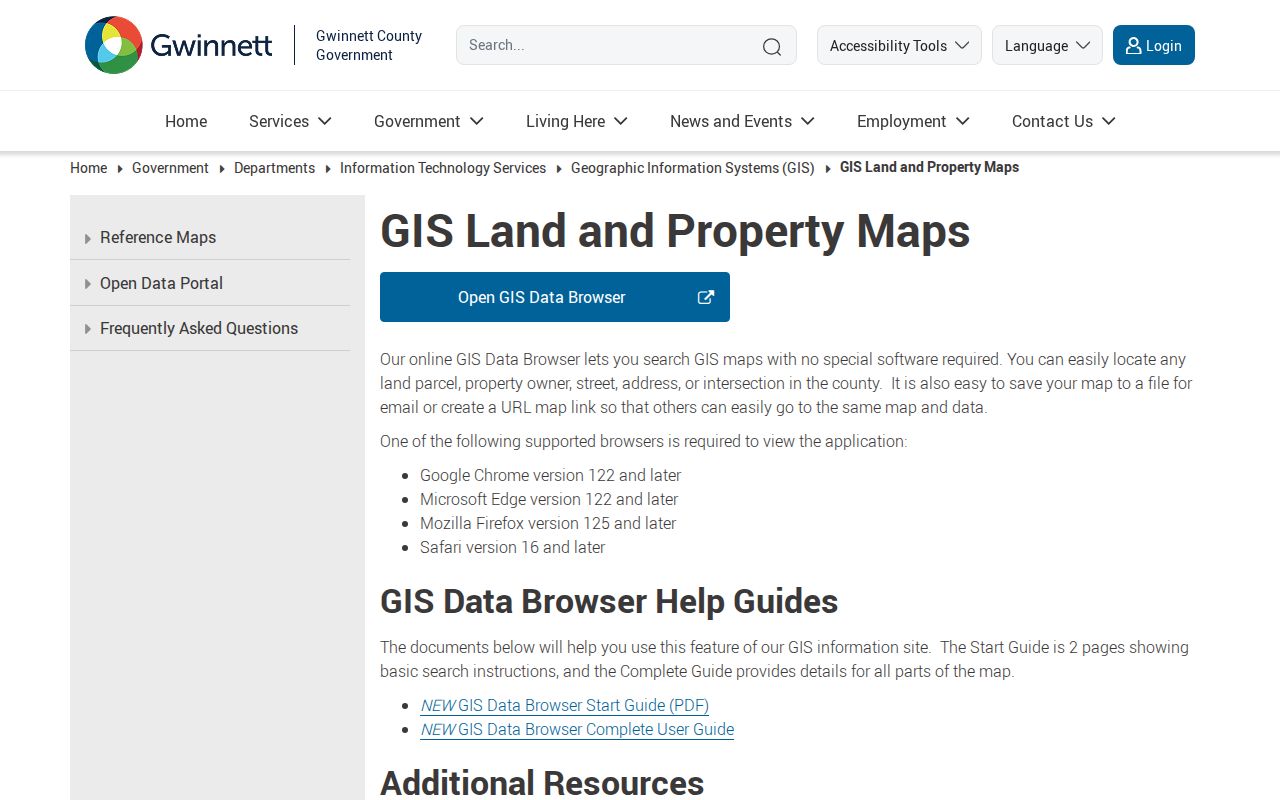
The map supports a visual walk around one address, but every adjacent parcel still needs its own Identify click and record check.
Suwanee Owners Are Not Occupants
Parcel records answer who holds the recorded property interest and where the tax bill goes. They do not inventory renters, children, relatives, roommates, or every adult at the address. In the county data, LOCADDR, LOCCITY, and LOCZIP describe the physical site. MAILADDR, MAILCITY, and MAILZIP describe correspondence. Confusing the two can place an owner on the wrong block.
The parcel details can also list Owner 1 and Owner 2, zoning, acreage, values, tax, property class, legal description, deed references, grantors, and an assessment-neighborhood number. Those fields help distinguish similar addresses and parcels. They remain property evidence, not a complete directory of your neighbors. Recent county notices also route some detailed owner, sale, and building data from the map popup to the linked assessor page.
Identity check. Match the parcel ID and legal description before using an owner name; street text alone is less stable.
Georgia Voter Data on a Block
Georgia My Voter Page is built for an individual to check registration, polling place, districts, and a sample ballot. It is not a public neighbor browser. Georgia law does allow elector lists to contain a voter's name, residence or mailing address, status, county, municipality, district, precinct, and date last voted. Participation history never reveals how the ballot was marked, and Georgia does not register voters by party.
The Secretary of State's Voter List Order Form offers geographic list types, including municipality, district, and up to five precincts. The research documents municipality files at $65 and up to five precincts at $35 under the July 2024 schedule. Normal production is one to two weeks after payment. It does not document a custom block or ZIP order. Any lawful block analysis must therefore respect the delivered file's geography and avoid claims about residents who do not appear.
Commercial use of Georgia voter lists is a misdemeanor under O.C.G.A. §21-2-601. Telephone numbers, full dates of birth, Social Security numbers, driver-license numbers, and ballot choices are excluded. These limits matter as much as the visible names.
Protected Suwanee Neighbors Stay Hidden
VoteSafe shields a qualifying registered voter's residence address and application for four years. The program applies to people covered by a protective or restraining order or living in a family-violence shelter, and it requires a county-registrar application with supporting proof. A person must reapply after moving to another county. Their absence from a released address list cannot be read as absence from the block.
Georgia's Safe at Home program adds a broader substitute-address system beginning July 1, 2026 under O.C.G.A. §§50-18-150 and following sections. Eligible participants at risk from domestic or dating violence, sexual assault, stalking, or trafficking can receive a substitute public-record address and mail forwarding. Their true voter residence remains sealed. These programs are designed to make protected neighbors invisible in public address records.
Suwanee Neighborhood Groups and Contacts
Community geography adds context that parcel polygons cannot. Named Suwanee areas include Shadowbrook at Town Center, Suwanee Station, Historic Old Town, and Town Center. Planning documents also use character areas such as Suwanee North, PIB/Suwanee Junction, Brogdon Road, Smithtown Road, PIB/McGinnis Ferry, Buford West, Satellite Boulevard, and Suwanee Gateway. These are planning or community labels, not proof that every resident belongs to an association.
PACT and Neighborhood Watch
Police liaisons work with subdivisions through PACT, which complements Neighborhood Watch. Neither program publishes a resident roll.
Suwanee Business Alliance
Its public directory shows voluntary names, organizations, and contact affiliations. It does not establish a home address.
Civic Networks
Suwanee Network, the Downtown Development Authority, Kiwanis, and North Gwinnett Rotary offer civic contacts, not household lists.
Historic Old Town has another useful layer. The 67-acre National Register district contains about 40 properties and includes areas known as Stonecypher, Old Suwanee, Brushy Creek, and Suwanee Green. Those labels can help match a modern parcel to local history, but they are not present-day resident groups. The same care applies to Town Center and Suwanee Station: a place name may describe planning character, a development, or common usage without defining one official roster.
The Suwanee cultural-assets project offers interviews, tours, research, and preservation videos tied to known places. Rhodes Hotel materials, for example, name Henry W. Rhodes and his wife Lillie and note that teachers once lodged there. Such sources can explain an older block, not identify current occupants. For current neighbor work, return to the parcel date, the public contact's stated role, and the boundary shown by GIS.
No official, exhaustive HOA or member-directory inventory was found. Congregation, alumni, union, veterans-post, funeral-home, and neighborhood resident rosters were also not confirmed as public sources. Contact a known group directly and ask only for its public point of contact.
Official Suwanee Rolls and Tools
Official records and commercial neighbor tools serve different roles. A government roll identifies its custodian, purpose, and field definitions. A commercial service may merge old files, public records, and inferred links without showing when each item changed. Use the category only as a lead, then return to the original custodian for verification.
| Source type | Useful strength | Main limit |
|---|---|---|
| County parcel and tax records | Current mapped ownership and parcel identifiers | Owner does not equal occupant |
| Released voter data | Registered-elector evidence under Georgia law | Protected and nonregistered people are absent |
| Community organization | Voluntary public affiliation or contact | Not a resident or member census |
| Commercial neighbor tool | Possible starting lead | Age, source, and accuracy may be unclear |
A careful search labels each result for what it proves. Parcel ownership, voter registration, and voluntary affiliation are distinct facts. None alone answers who all the Suwanee neighbors are at a given moment.
Privacy Limits for Suwanee Neighbors
Utility customers, delivery records, driver data, unindexed household members, and private association rosters are not public neighbor directories. Federal driver-privacy law blocks motor-vehicle data from becoming an address source. Georgia law also requires redaction of specified identifiers. Ask the custodian for an existing record, not for research into a person's private life.
Public availability does not permit surveillance or intimidation. Georgia's stalking, aggravated-stalking, and harassing-communications laws apply even when a fact began in an open record. Use a block search for civic curiosity, a property question, reconnecting with someone known, or personal safety awareness. Stop when a resident asks for no contact.
Lawful use. Suwanee neighbor records may support a legitimate personal inquiry. Never use them to watch, harass, threaten, or harm anyone.