
Suwanee Directory Years on Shelf
The strongest confirmed printed run is held by the Gwinnett Historical Society in its genealogy library at the Historic Gwinnett County Courthouse. Its catalog separates countywide and multi-city books, which matters because “Suwanee” may appear inside a title led by other Gwinnett communities. The society has more than 2,000 publications plus maps, photographs, microfilm, and surname, church, cemetery, school, place, and subject files. These are onsite sources, not a continuous web index.
| Collection | Years | Where Held | Access |
|---|---|---|---|
| Buford, Duluth, Lawrenceville | 1962, 1964 | Historical Society, T1 | Onsite; Suwanee coverage unconfirmed |
| Gwinnett County Directory | 1972–73 | Historical Society, T1 | Onsite |
| Six-city volume naming Suwanee | 1974, 1976, 1980, 1983, 1985 | Historical Society, T1 | Onsite; confirmed Suwanee title |
| Atlanta Suburban Directory | 1988 | Historical Society, T2 | Check local coverage onsite |
| Structured Survey of Gwinnett Residences | 1978, three volumes | Historical Society, T4 | Onsite building and address context |
| U.S. historical directory database | 1821–1989 umbrella | GCPL or Georgia Archives | Database access; not a continuous Suwanee run |
The catalog does not state publishers, prove a reverse street section, or describe every gap. Inspect title pages and abbreviation keys before citing a volume. The 1974 book is the first cataloged title that expressly names Suwanee. Earlier material may still include Suwanee residents, but the 1962 and 1964 coverage needs an onsite check. A careful directory search reports a gap instead of treating a missing catalog year as proof that no household was present.
Suwanee Directory Research in Lawrenceville
The genealogy library is in Room 210 of the Historic Gwinnett County Courthouse, 185 West Crogan Street in Lawrenceville. Published hours are Monday, Wednesday, and Friday from 10 a.m. to 2 p.m. Call 770-822-5174 or email ghs@gwinnetths.org before a focused visit. The society's detailed catalog supplies the shelf codes used in the table.
Bring a list of target surnames, known addresses, and likely years. Ask to see the whole volume, not a transcribed name alone. Front matter can explain the geographic scope, publisher, abbreviations, and arrangement. Photograph or transcribe the title page and key before the entry. Then note the page number and exact line. That record trail makes a later Suwanee volume citation understandable to another researcher.
Note: Confirm hours before traveling because the genealogy library is staffed on a limited weekly schedule.
Reading a Suwanee Directory Entry
A standard printed entry can identify a head of household, spouse, street address, occupation or employer, and separate wage earners. Some volumes also arrange names by address. The research catalog does not confirm which marks occur in every Suwanee volume, so read the key printed in the specific book. Never expand an abbreviation from memory when the volume can define it.
| Personal name | Copy the full spelling, initials, suffix, and any spouse notation. |
|---|---|
| Work detail | Record the printed occupation or employer without modernizing it. |
| Street line | Keep the house number, street spelling, and residence notation exactly. |
| Household clues | Note separate wage earners or people sharing the same address. |
| Symbols | Use that volume's key before interpreting owner or resident marks. |
- Criss-cross directory
- An address-arranged section that lets a researcher move from a street and house number to a listed name.
- Householder index
- A list centered on heads of households, sometimes separate from the main alphabetical entries.
- Abbreviation key
- The volume's own guide to shortened occupations, street terms, marital notes, and symbols.
A directory entry is evidence of a listing, not a full census of a home. Children, unlisted adults, and many other household members may be absent. Compare an address with the next and prior edition before deciding that a move occurred.
Suwanee Names Between Directory Years
Newspapers help bridge years when no Suwanee volume is cataloged. Gwinnett County Public Library microfilm spans many local titles, including the Weekly Gwinnett Herald from 1871 to 1897, News Herald from 1894 to 1965, Gwinnett Daily News from 1965 to 1992, and Gwinnett Daily Post from 1995. Stated gaps still apply. Notices, obituaries, business ads, school news, and civic reports can connect a person to Suwanee at a date between directory editions.
The microfilm reader can print a page, save it to a USB drive, or send it by email. Library staff also offer Book-a-Librarian help and article or obituary requests. Search the newspaper after extracting the exact surname, employer, and street from the directory. Those details are far more useful than a broad name search.
The library's microfilm holdings page shows the local coverage available before a visit. Its coverage table helps a researcher choose a newspaper and date range instead of scanning an unrelated reel.
Suwanee Directory Databases and Guides
GCPL provides two useful but different genealogy channels. Ancestry Library Edition is used inside a branch with a library barcode and PIN. HeritageQuest is available remotely through GALILEO credentials and adds census, pension, and family-history sources. The broad historical-directory database label does not promise an unbroken Suwanee sequence, so test each year and city form.
Library research guides can point toward genealogy tools and local sources. Review the GCPL guides page before choosing between an onsite database session and a remote census search.
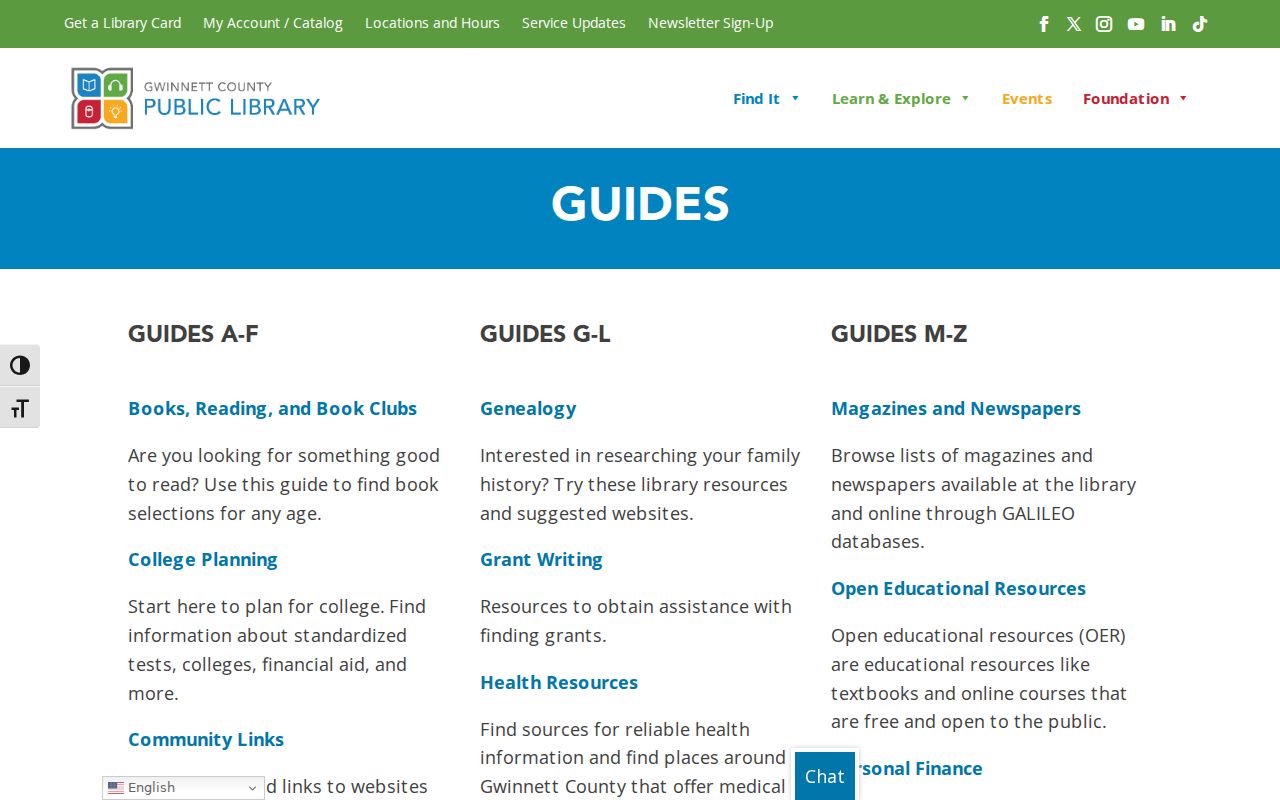
The guide list is a starting point, while the historical society catalog remains the firm source for confirmed Suwanee directory years.
Georgia Archives for Suwanee Directories
The Georgia Archives adds county microfilm, General Name File cards, city directories, indexes, GenealogyBank, and Fold3. Its resources are especially useful when the local shelf stops or a surname appears before the confirmed Suwanee run. Search the catalog with “Gwinnett,” nearby city names, and the record type, not only “Suwanee.” Countywide volumes often hide the local entry a city-only query misses.
The archive also helps reconcile major gaps. Gwinnett census microfilm runs from 1820 through 1920, but the 1890 federal census is missing. The historical society's 1890 tax digest, keyed with land lots, offers a local substitute for that lost census year. Neither source works exactly like a household book, but together they can locate a family and its property context.
The Georgia Archives catalog landing page is the source for planning that wider search.
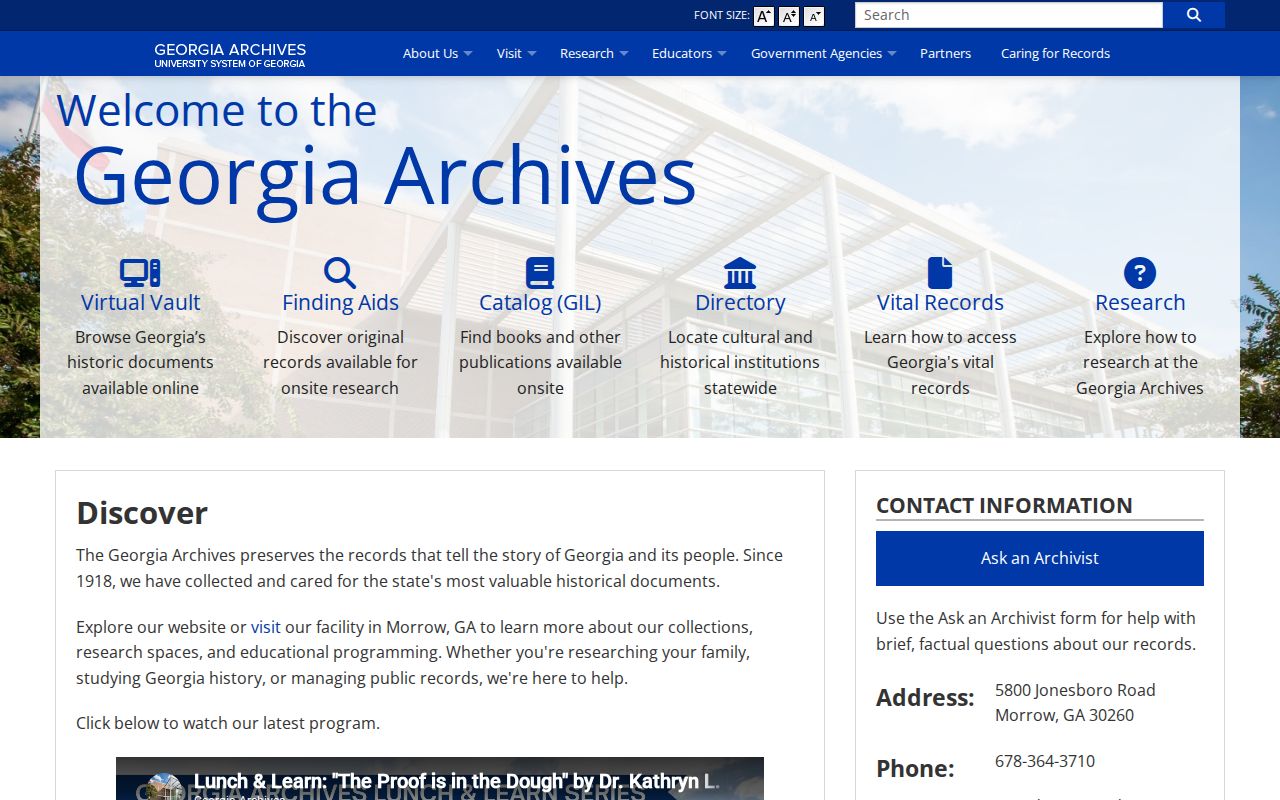
The archive screen supports a county-first search when a city name does not appear in a title.
Suwanee Streets in 1923
Suwanee's 1923 Sanborn fire-insurance map records every structure in the small town of that period. It is an unusually detailed bridge before the confirmed multi-city directory run. Pair the map with a street name, business reference, photograph, tax clue, or deed description. Modern numbering may not match the sheet, so building position and nearby landmarks can matter more than a present house number.
The city's historic timeline also records an 1881 fire that destroyed every Main Street store but one. That event warns against assuming a business stayed at one address or under one name. It did not destroy the county deed books. Keep the city fire story separate from the loss of Gwinnett land records before September 26, 1871.
Suwanee Families Beyond City Directories
Church, cemetery, surname, and school files can identify residents omitted from a printed directory. The historical society's Gwinnett Churches covers 92 churches and includes 1911 membership lists. Its First Families program preserves documented Gwinnett lines present by 1820, 1850, or 1880, though current contact details are removed. These sources fit family history because they show community ties without pretending to be current resident rolls.
Cemetery names need special care. Jackson Street Cemetery has also been called Allen, Freeman, and Cemetery Street Cemetery. Search all four forms in catalogs, newspapers, and surname files. A missed alias can look like a missing person when the record is merely filed under another place name.
Note: Companion files can support an identity, but each claim should retain its source, date, and original spelling.
Trace Suwanee Families by Directory
Follow one household across the confirmed 1974, 1976, 1980, 1983, and 1985 volumes. Preserve the surname, initials, spouse, occupation, address, and printed marks each time. Then pair the directory years with census records, deeds, probate, and newspapers. A change is useful only after another source helps explain it.
- Find the earliest confirmed entry, then copy it exactly with the page and volume title.
- Move forward through each available year and log address, spouse, and work changes.
- Check any address-arranged section only after confirming that the volume includes one.
- Pair directory dates with public census years and the 1890 tax-digest substitute where relevant.
- Use newspaper obituaries, probate files, cemetery aliases, and deeds to explain the last appearance.
Disappearance can mean a move, death, changed surname, missed edition, or decision not to list. It does not prove the household left Suwanee. Search the next newspaper years, a probate index, and later deed instruments. For a modern address-based trail, the Suwanee street directory handles current parcel and street records without repeating the historical shelf.